Overview Melio · 2017–2018 · Product Design

Bill pay and
invoicing for
small business.

Melio's mission is to help small businesses manage their payouts through a smart B2B payment solution built for their needs. As Lead Product Designer in the company's early market-fit stage, I structured and designed the initial user journey — from onboarding through core payment flows.

Role
Lead Product Designer, Core Product
Platform
Web
Timeline
2017–2018 · Early market-fit stage
§ 02 — Overview

A unified dashboard for accounts payable and receivable

Small businesses were managing payments across scattered tools — spreadsheets, email threads, manual bank transfers. There was no single surface that gave them visibility and control over both what they owed and what they were owed.

Melio's digital A/P and A/R dashboard provided one integrated tool: transfer and receive payments quickly, maintain cash-flow visibility, eliminate late payment costs, and save hours each week.
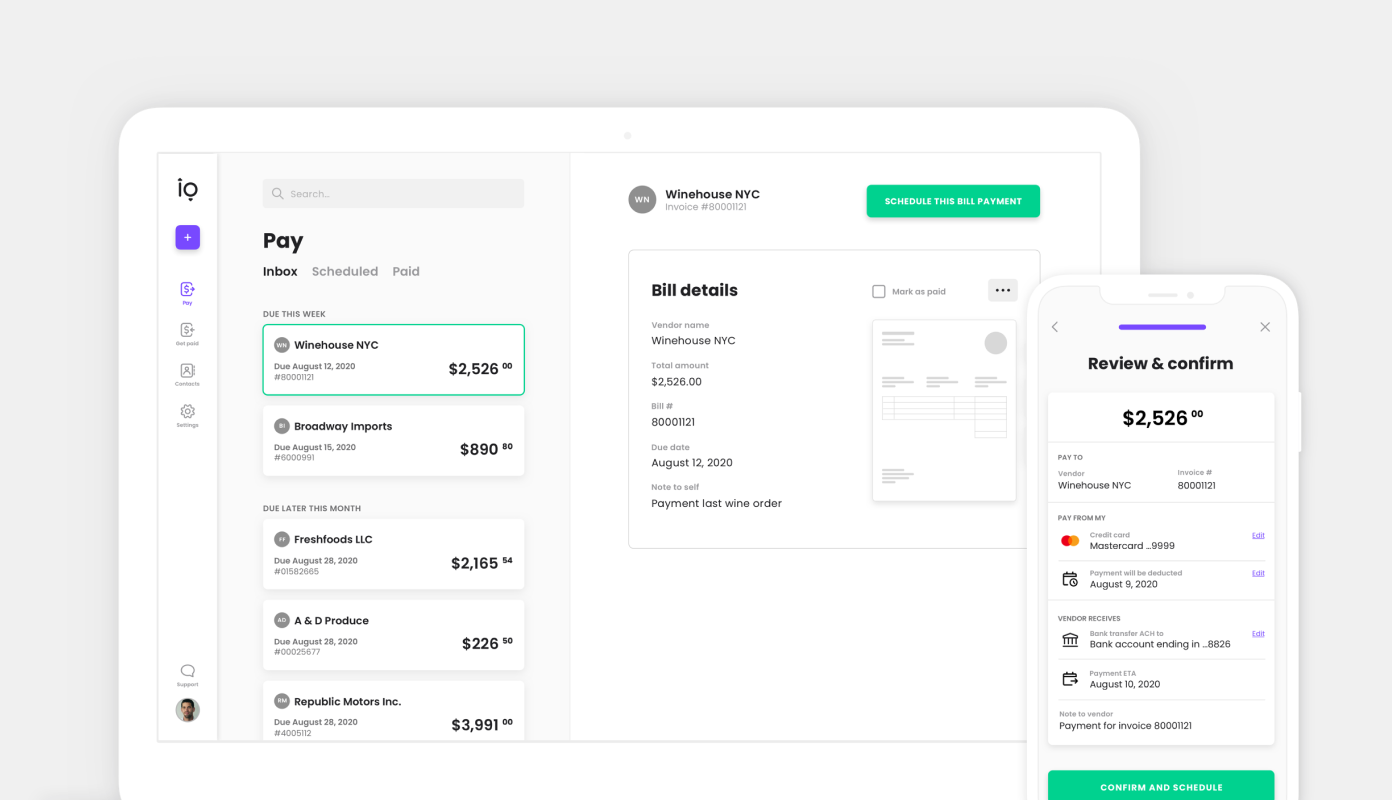
Melio dashboard
Product capability

Upload & convert invoice (IDP + OCR)

Users can upload a vendor invoice and have it automatically parsed — vendor name, amount, and due date extracted and pre-filled. Removing manual data entry eliminated the biggest drop-off point in the first payment flow.
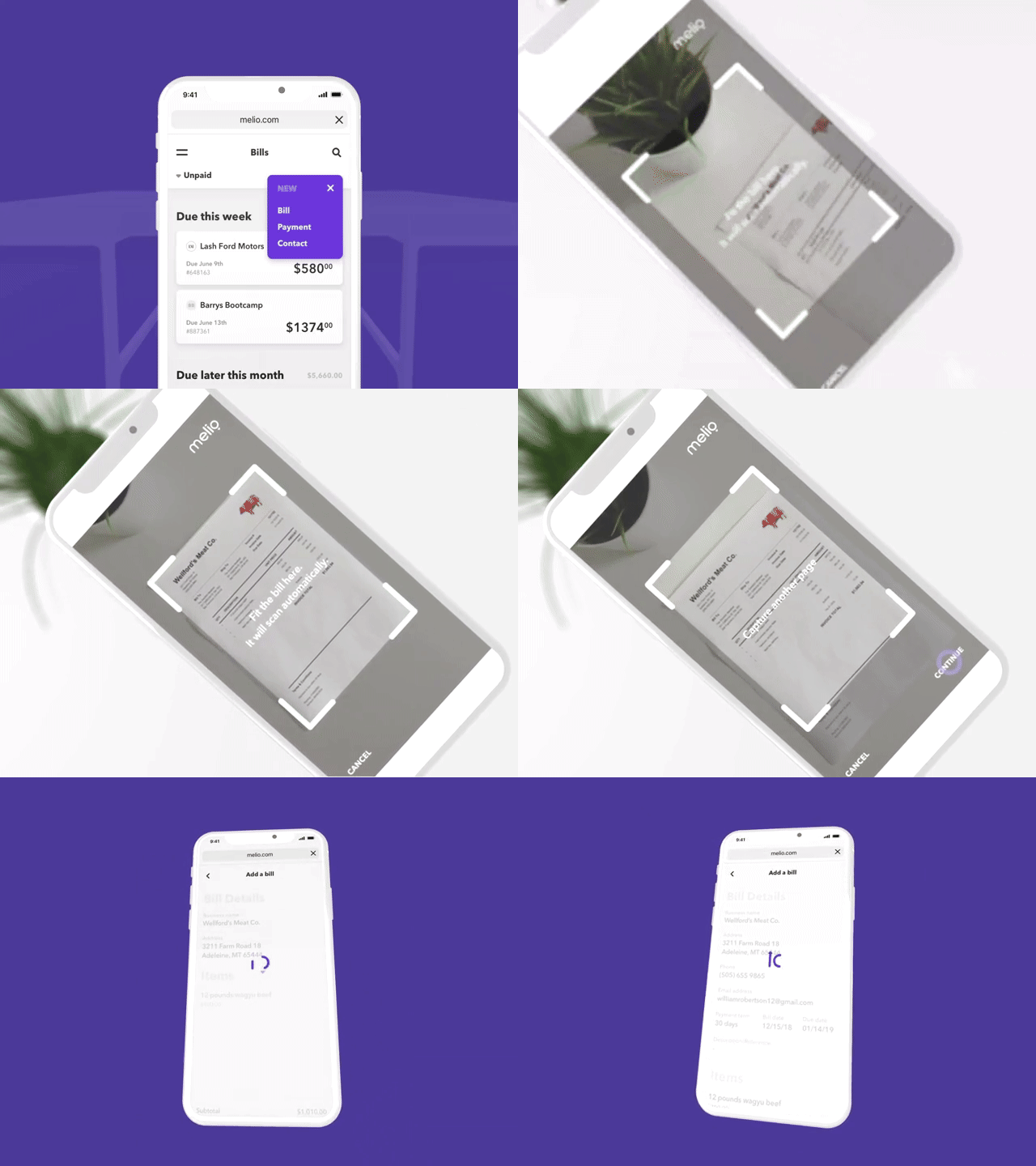
Upload and convert invoice — IDP + OCR Upload & convert invoice (IDP + OCR)
§ 03 — Case study · Onboarding flow

One flow for all users.
Progressive by design.

The old flow had two separate onboardings, no persona distinction, and no foundation for progressive engagement. The redesign unified them into a single streamlined path — collecting only what was critical upfront, deferring the rest.

Final design

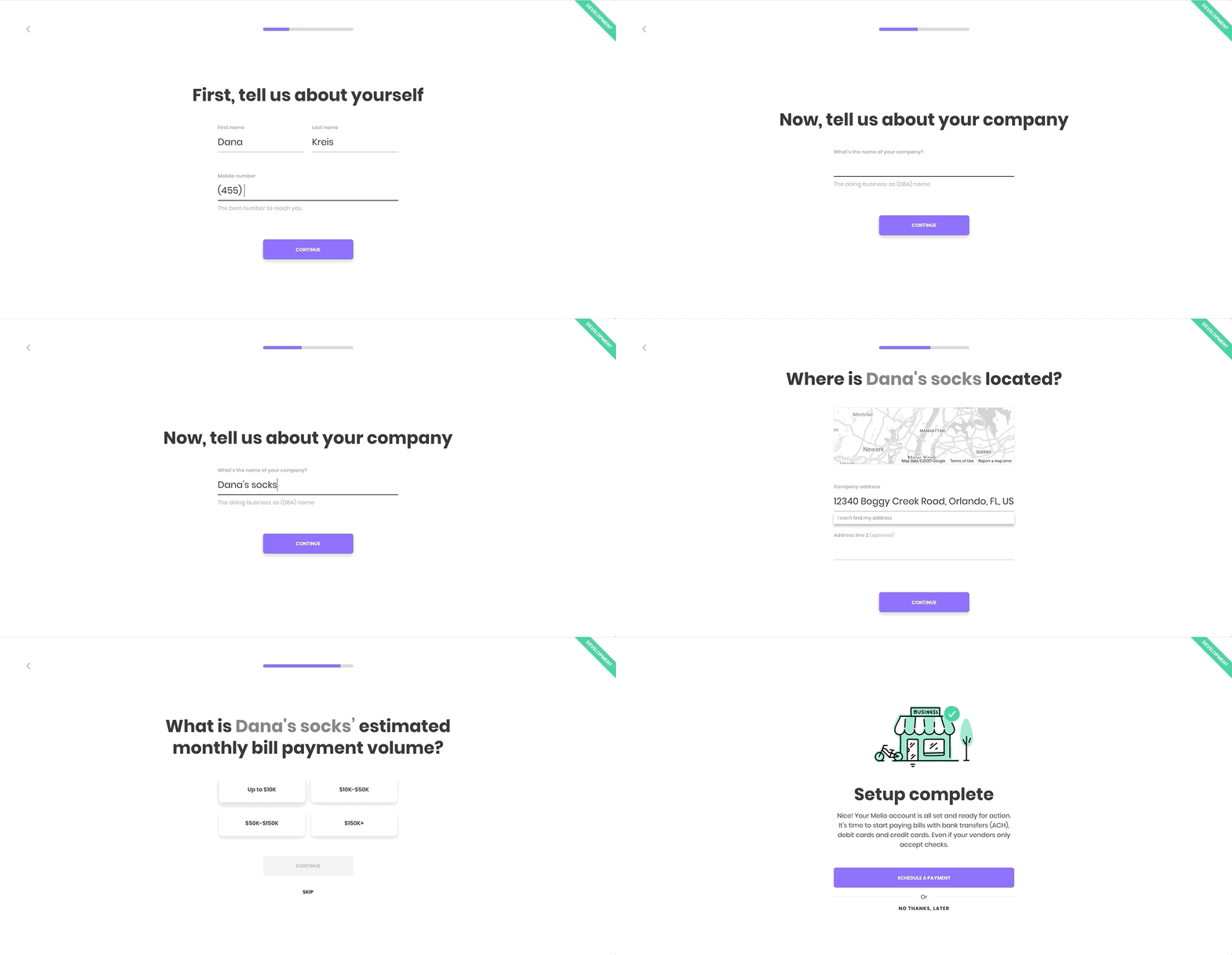
Full flow

A unified flow replacing two separate entry points. Steps were reduced to the critical minimum; each screen collects one decision, keeping the experience fast and legible across both desktop and mobile.

Onboarding full flow
Design detail

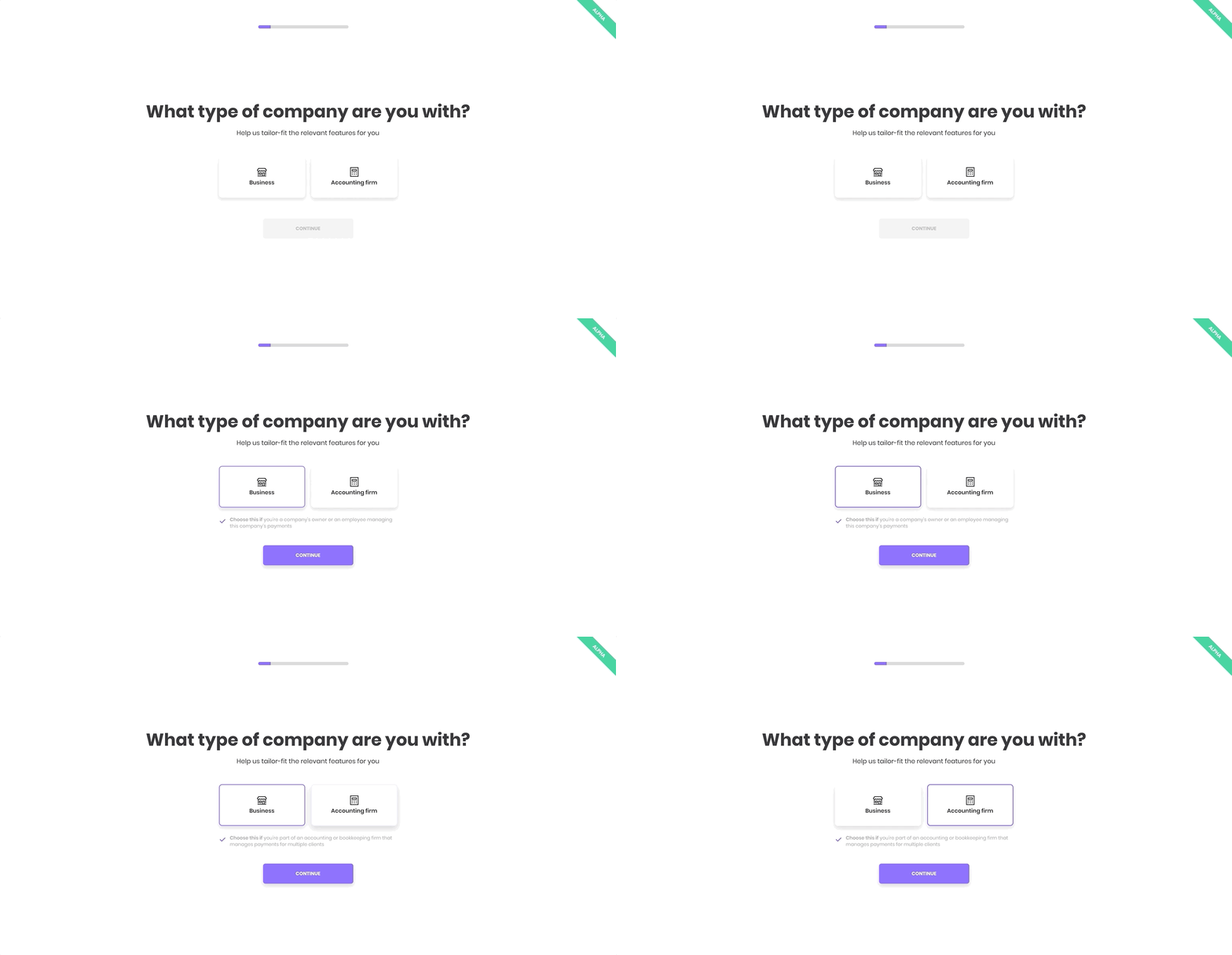
Role selection

Users select their role (Business owner, Employee, Bookkeeper, Accountant) before the main CTA. An extra layer of contextual information appears on selection — letting users make an informed choice before committing.

Why it matters: Role selection unlocks product personalisation from step one — different personas see different default states and feature emphasis throughout the product.

Role selection step Role selection step
Design detail

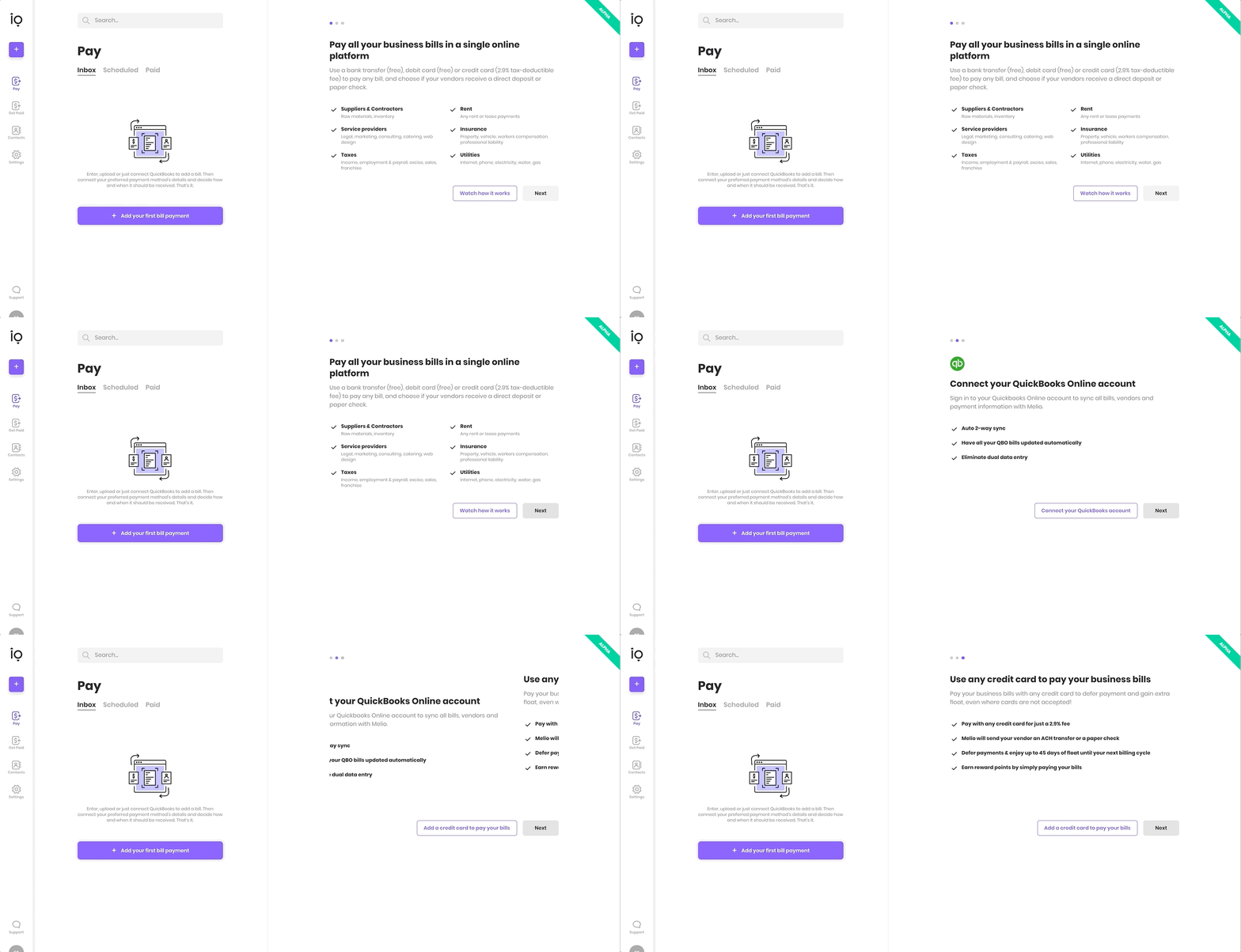
Progressive onboarding

Deeper questions and feature education are deferred until users are already active in the product. Contextual prompts surface at the right moment — when users are invested enough to engage, not during initial setup.

Key decision: Stakeholders wanted more data upfront; users needed less friction. Progressive onboarding resolved the tension — ask more, but ask later.

Progressive onboarding
80%
of users completed the onboarding flow
82%
of payees added a receiving method
50%
of payors completed their first payment
§ 04 — Batch payments

Paying multiple vendors
in a single run.

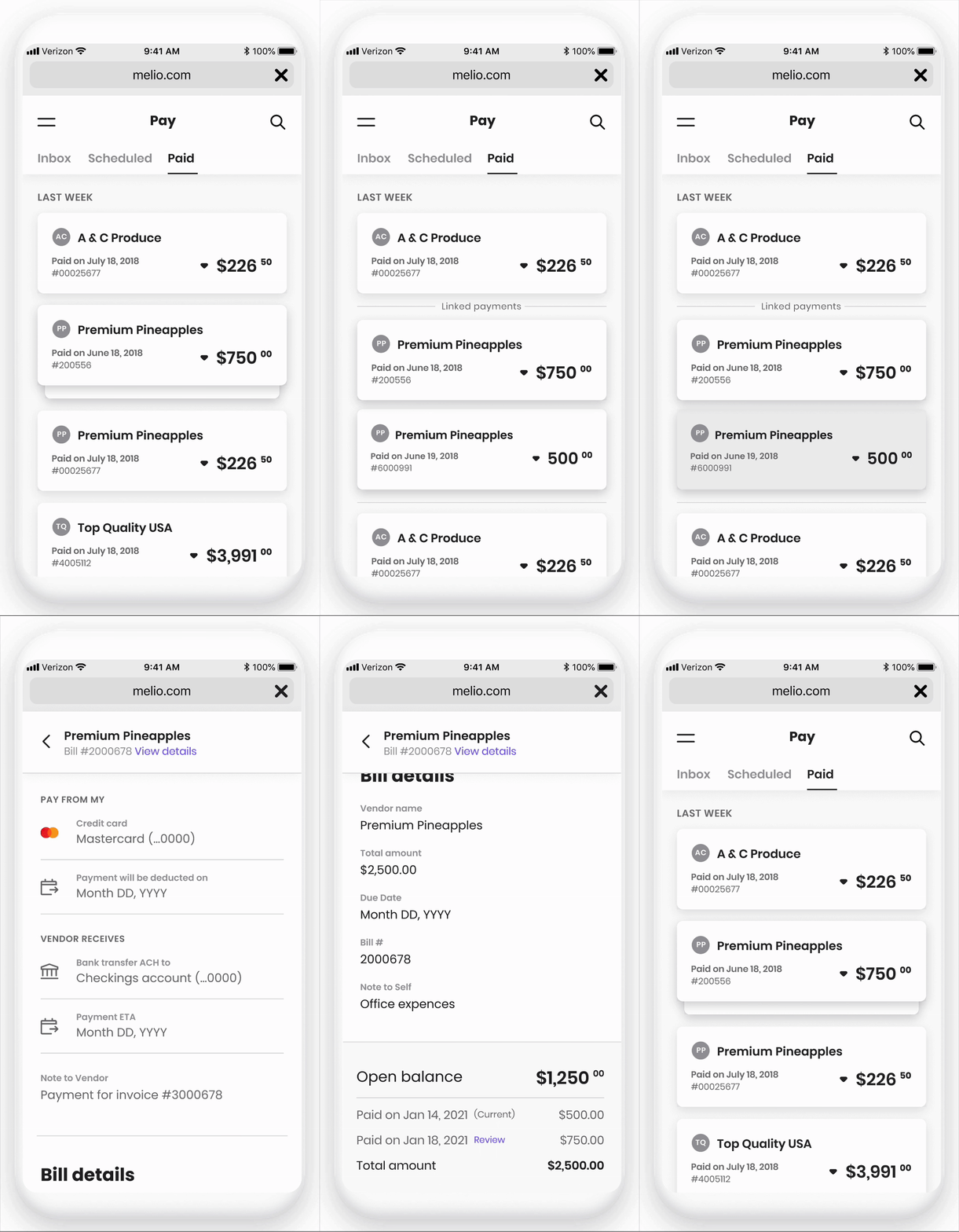
As payment volume grew, users were running a full payment wizard for every individual bill. The batch flow introduced a full-screen mode with inline editing, shared defaults, and a happy-path approach: submit all valid bills first, handle missing data after.

Batch settings let users apply a default deduction date and payment method across all bills in a run. Inline error handling surfaces only the bills that need attention — without blocking the rest of the batch.

Key decision: Don't block on errors. Submit what's valid, surface what needs fixing after. Users confirmed they'd rather skip a problematic bill than halt the entire batch.

Batch payments flow
§ 05 — Summary Shipped 2018

From scattered tools
to a single payment system.

A unified onboarding with role-based personalisation and progressive disclosure, plus a batch payment flow built around the happy path. Together they established Melio's core interaction model at early market-fit stage.

80%
Onboarding completion rate
82%
Payees added a receiving method
50%
Payors completed their first payment
Next project
Deco. →